
What’s in this Guide
- What Are Pre-IPO Fees?
- Common Pre-IPO and Secondary Market Fees
- How Different Fee Structures Affect Potential Returns
- How to Calculate the All-In Cost of a Pre-IPO Investment
- Questions to Ask Before Paying Pre-IPO or Secondary Market Fees
- Frequently Asked Questions
- Compare the Full Cost Before You Invest
Pre-IPO investing can seem simple, but the true cost often goes beyond the share price. Investors may face transaction fees, SPV expenses, management fees, carried interest, bid-ask spreads, and other charges that can reduce returns.
The SEC’s Investor.gov fee bulletin notes that even modest fees can materially affect portfolio value over time. This guide explains the main pre-IPO fees and secondary market fees, where they appear, and how to compare opportunities on an all-in cost basis. Private securities can also be illiquid, difficult to value, and capable of producing a total loss.
Quick Facts
- Pre-IPO costs include explicit charges, such as a transaction fee or management fee, and implicit costs, such as the bid-ask spread.
- SPVs may add setup, legal, administrative, tax, audit, or ongoing operating expenses on top of the underlying share price.
- Carried interest is generally a share of investment profits paid to a manager or sponsor, but the percentage and calculation method vary by deal.
- Minimum investment sizes affect capital efficiency because a high minimum can force more capital into one illiquid company.
- Compare net economics: what you pay, what you own, which fees continue after closing, and what portion of future gains you keep.
What Are Pre-IPO Fees?
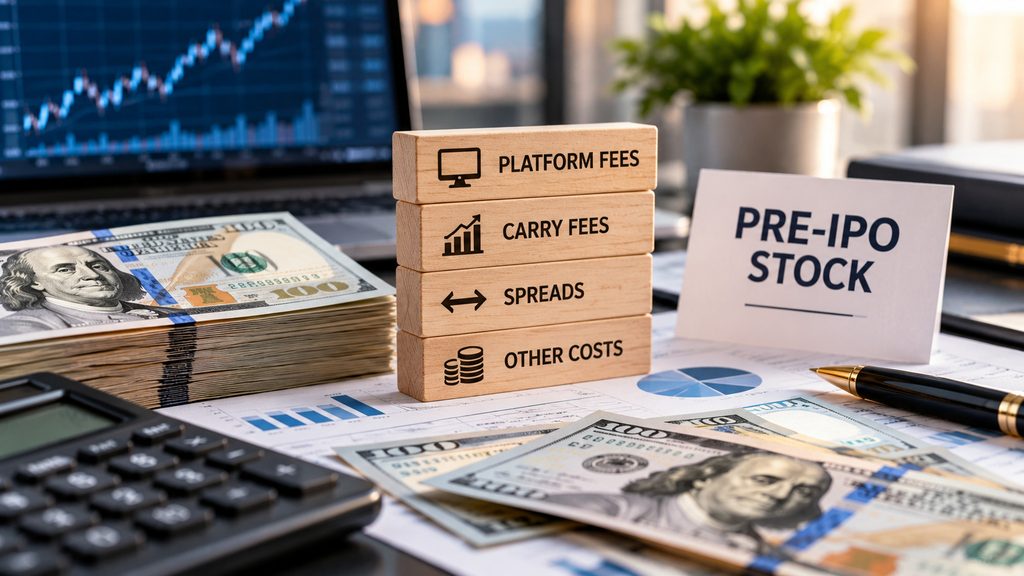
Pre-IPO fees are the costs associated with buying, holding, or selling shares in a private company before an IPO, and they can vary widely by deal structure.
These may include upfront charges such as platform, brokerage, transaction, legal, or closing fees; ongoing costs such as management and administration fees; and performance-based costs such as carried interest.
Investors should also consider less-visible costs, including bid-ask spreads, markups, and SPV expenses that can reduce the amount ultimately returned.
Common Pre-IPO and Secondary Market Fees
Platform or Transaction Fees
Transaction fees can apply when buying or selling investments and may vary depending on how an intermediary is compensated. A hypothetical 3% fee on a $100,000 investment equals $3,000. If added on top, total cash outlay is $103,000; if deducted, only $97,000 may be invested. Investors should confirm how the fee is applied because it changes the effective entry cost.
SPV Fees and Expenses
Many pre-IPO deals use a special purpose vehicle (SPV), where investors hold an interest in the vehicle rather than owning company shares directly. The distinction between SPV ownership and direct shares in pre-IPO investments matters because each structure can involve different costs, ownership rights, and administrative responsibilities. SEC-filed disclosures indicate that SPV investors may bear a proportionate share of operating and offering-related expenses, which can reduce investment returns. These may include legal, administrative, accounting, audit, and operating expenses, depending on the specific vehicle.
Management Fees
A management fee compensates an investment manager or adviser for managing an investment portfolio or vehicle. The fee may be calculated using different bases depending on the agreement, so investors should confirm how it is calculated, how often it is charged, and when it ends.
Carried Interest
The SEC defines carried interest as a type of performance fee in which a private fund manager receives a portion of investment profits. If a hypothetical $100,000 investment grows to $160,000 and 20% carry applies to the $60,000 gain, the carry would equal $12,000. Actual percentages and calculations vary, so investors should review the specific terms, including any hurdles or preferred returns.
Bid-Ask Spreads and Price Markups
Bid-ask spreads reflect the difference between what buyers are willing to pay and what sellers are willing to accept. In private markets, wider spreads and price markups can increase the effective cost of a transaction, even when they do not appear as separate fees.
Minimum Investment Sizes
Minimum investment requirements are not fees, but they affect portfolio flexibility. A high minimum can force more capital into a single private company, increasing concentration risk and reducing diversification. FINRA notes that private placements can also be difficult to sell quickly.
Other Costs That Can Be Easy to Miss
Other costs may include legal review, custody, wire transfers, escrow, tax preparation, currency conversion, financing charges, and exit fees. Transfer restrictions, company approvals, and rights of first refusal can also add time, cost, or liquidity friction.
How Different Fee Structures Affect Potential Returns
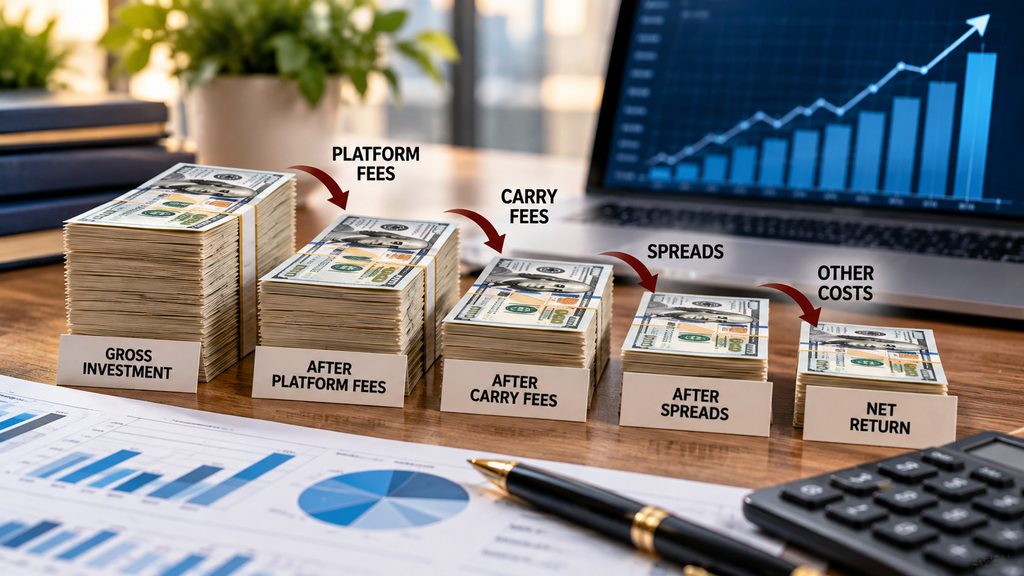
Different fee structures affect when investors pay costs and how much of their potential return they keep. Two deals with similar share prices can therefore produce different net results.
Upfront Fees
Upfront transaction or platform fees increase the initial cost of entering an investment. These charges may be paid in addition to the investment amount or deducted from the capital being invested.
Ongoing Fees
Management, administration, or SPV expenses may continue while the investment is held. Over longer holding periods, these recurring costs can reduce the amount ultimately returned to investors.
Performance-Based Fees
Carried interest is generally tied to investment gains rather than the initial purchase. This means investors may pay less upfront but give up a portion of future profits if the investment performs well.
Why the Structure Matters
The key difference is when and how fees are charged. Some structures create higher costs at entry, while others reduce returns over time or after a profitable exit. Investors should compare the total expected cost rather than focusing on a single headline fee.
How to Calculate the All-In Cost of a Pre-IPO Investment
Use a repeatable process before committing capital.
1. Start with the purchase price. Record the price per share, number of shares or SPV units, and amount allocated to the underlying investment.
2. Add every upfront charge. Include transaction, platform, placement, setup, legal, and closing costs.
3. Identify ongoing expenses. Note management, administration, custody, and annual SPV charges, plus the base used for each calculation.
4. Map the performance fee. If carry applies, identify the percentage, hurdle or preferred return, catch-up provisions, and definition of profit.
5. Estimate trading friction. Compare the purchase price with credible secondary indications or recent transaction data. Treat a material spread or markup as part of the economic cost.
6. Review exit costs and restrictions. Determine whether selling could trigger another fee, legal expense, transfer charge, company approval, or holding restriction. Investors should also account for pre-IPO lock-up periods and what happens after an IPO, since restrictions on selling shares may extend the holding period and delay access to investment proceeds.
7. Compare net outcomes. Model downside, flat, and upside cases so you can see how the structure behaves across different results.
A useful framework is: net proceeds = gross exit value minus ongoing expenses, exit costs, and performance allocations. Compare that figure with total cash actually paid, not only the nominal amount invested.
Questions to Ask Before Paying Pre-IPO or Secondary Market Fees
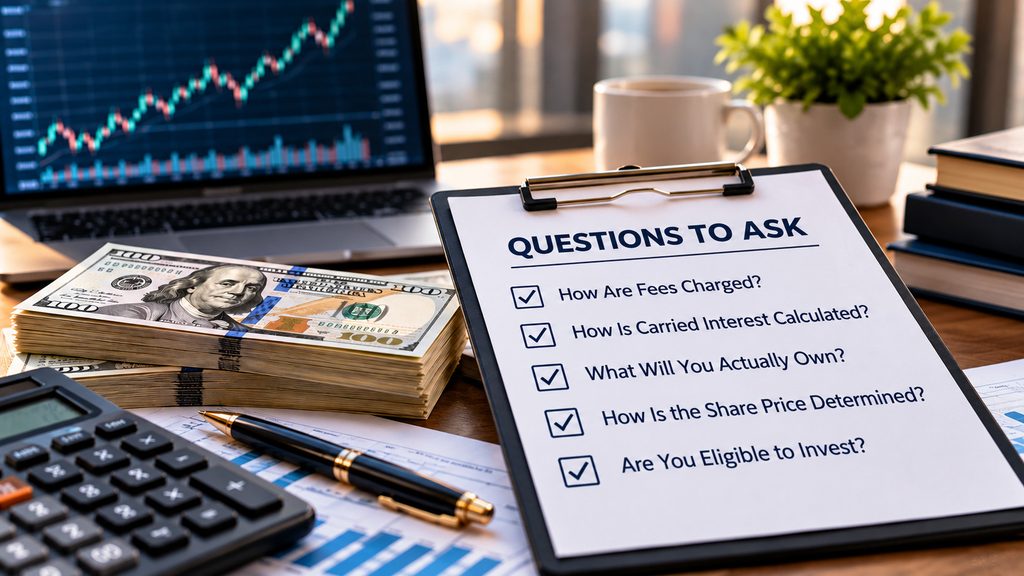
Before funding a private-company transaction, review the fee schedule and offering documents carefully. The goal is to understand both the visible charges and any costs that may reduce returns later.
How Are Fees Charged?
Confirm whether transaction fees are added to the investment amount or deducted from it. Also check whether the SPV charges annual expenses, management fees, legal costs, transfer fees, or additional charges at exit.
How Is Carried Interest Calculated?
If carried interest applies, ask how the profit-sharing formula works, what percentage is charged, and whether any hurdles, preferred returns, or other conditions affect the calculation.
What Will You Actually Own?
Determine whether you are purchasing shares directly or buying an interest in an SPV or other investment vehicle. This can affect fees, voting rights, transferability, and how distributions are handled. The differences between common and preferred stock in pre-IPO companies also matter because share classes may carry different liquidation preferences, voting rights, and economic terms that influence potential investment outcomes.
How Is the Share Price Determined?
Ask how the underlying share price was established and whether recent transactions, company valuations, or other pricing references support it. Understanding what a 409A valuation is and why it matters for pre-IPO investors can provide additional context, although a 409A valuation does not necessarily reflect the price investors would pay in a secondary transaction. Comparing available pricing references can help identify possible markups or unusually wide spreads.
Are You Eligible to Invest?
Many exempt private offerings are limited to accredited investors. Current SEC guidance explains that individuals may qualify through income, net worth, certain professional licenses, or other criteria. Those exploring whether non-accredited investors can buy SpaceX stock before an IPO should understand that eligibility depends on the specific offering, applicable securities exemptions, and investment structure. Accreditation determines eligibility for certain offerings, but it does not make an investment safe or suitable.
Frequently Asked Questions
Are pre-IPO fees negotiable?
Sometimes. Negotiability can depend on the intermediary, deal size, structure, and offering terms. Investors should confirm the final fee schedule before committing capital.
What is a typical transaction fee for pre-IPO stock?
There is no universal rate. Pre-IPO fees can vary by platform, intermediary, investment size, and deal structure, so each opportunity should be reviewed individually.
Can secondary market fees change before closing?
They can. Secondary market fees may vary based on transaction terms, deal size, intermediary policies, or other conditions. Confirm all charges before funding the investment.
Are pre-IPO fees refundable if a deal does not close?
It depends on the agreement and type of fee. Some charges may be refundable, while others may cover services already performed. Review the written terms before sending funds.
Do pre-IPO fees still apply if a company never goes public?
They may. Some fees relate to purchasing, holding, or administering the private investment rather than a future IPO. Investors should review the agreement to understand which costs apply regardless of the company’s eventual exit.
Compare the Full Cost Before You Invest
Evaluate pre-IPO deals on net economics rather than a single fee. Consider purchase price, transaction charges, SPV expenses, management fees, carry, spreads, minimums, transfer limits, secondary market fees, and exit costs.
Buy Pre IPO Stock By Best assists investors in evaluating private-market deal structures and key questions. Always review terms carefully and consult qualified legal, tax, or financial advisors.
Explore pre-IPO opportunities and contact Buy Pre IPO Stock By Best to discuss private-market access.
Disclaimer: This article is for informational purposes only and is not investment, legal, tax, or financial advice. Pre-IPO investments involve risks, including illiquidity, uncertain valuations, fees, transfer restrictions, and possible loss of capital. Investors should review offering documents and consult qualified professionals before investing.
Related Posts